Now that Weston has had its first snow day of the year, many are hoping for the joy of having another day off from school. Often students are disappointed when snow days aren’t called, but the reality is that the process of deciding about this is a tough call made by local and regional administrations. The decisions are taken very seriously given that snowy weather can impact bus drivers, teachers, and students.
To make an informed decision about possible inclement weather, the superintendent and other school and town administrators communicate through online group chats and video conferences to gain information before the final decision is made.
“All of us together, very early in the morning, [at around 4 a.m.] and sometimes overnight, are in conversation with each other about what’s happening on the roads and what’s happening with the storms,” said superintendent Karen Zaleski.
Although many administrators help in deciding the verdict on a snow day, it is not determined by unanimous agreement.
“The final decision to call a snow day rests with the Superintendent of Schools, Dr. Zaleski,” said assistant superintendent of technology and operations Neil Trahan.
The process begins with monitoring weather forecasts and news reports to learn about potential snow storms.
“I receive information from Boston Meteorology, and emails that are tracking the storm,” said Zaleski. “That’s how I am tracking the storm initially and learning that they’re coming.”
Various conditions are taken into account to determine whether buses and students can safely commute to and from school.
“We assess multiple factors [including] the extent of downed trees, low-hanging branches, or downed power lines that may block roads or interfere with bus clearance, and the presence of untreated or refreezing surfaces that could compromise safe travel,” said Zaleski. “We also consider the overall pace of road cleanup across town.”
To gather all of this information, Superintendent Zaleski, the Weston Department of Public Works, the fire department, the chief of police, the director of facilities, and the assistant superintendent of technology and operations all work collaboratively in the process.
The fire department advises the superintendent regarding storms and weather conditions in relation to how they affect emergency services’ ability to safely help people who call for assistance.
“We have given our input about upcoming storms that would impact our area, especially if it’s an out-of-the-ordinary storm such as an ice storm,” said chief of Weston fire department Hayes Brian.
The police department provides expertise on local road conditions during these conversations.
“We have officers out on the streets of the town 24 hours a day,” said chief of police Denis Linehan. “They can easily assess the road conditions and tell me if there have been a lot of accidents, power outages, or road closures.”
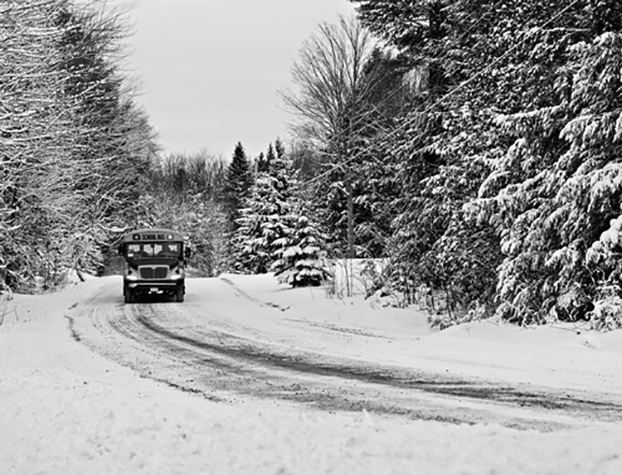
If the choice is for the district not to have a snow day during bad weather, bus drivers may have to prepare for icy roads and slippery conditions.
“[The busses] have seasoned tires in the back, and those are good in snow,” said bus driver Bernie Sinacole Jr. “They also have anti-lock brakes that keep the wheels from locking up and putting the bus in an uncontrollable skid.”
Communication is vital while driving under snowy conditions and potential obstacles such as roadblocks.
“[The buses] have two-way radios, which keep the driver in touch with the school and police officers if they are needed,” said Sinacole Jr. “[There are] cameras that show what’s going on inside and out in case something happens.”
While students generally are happy at the time a snow day is called, some students recognize that the trade off is a longer school year before summer vacation can start.
“I think the school has done a pretty good job of [deciding about] snow days so far,” said senior Finlay Wickman. “I think that the policy about extending [the school year] is a little unreasonable, but the government mandates the school to do that.”
On the other hand, bus drivers acknowledge the difficulties that the school faces while prioritizing safety.
“You never know how bad the storm will actually be,” said Sinacole Jr. “Weather reports are not always accurate, and the school needs to make the best decision possible for both the students and the drivers to keep everyone safe.”
Students also recognize the unpredictability of weather.
“I think the school often gets really unlucky,” said freshman Alyssa Nie. “This is because whenever we get snow days, I feel like there is very little snow and ice, but when we don’t have snow days, it’s icy and dangerous outside.”
While it is never easy for those involved to be sure they’ve made the right decision about snow days, that decision is always based on reducing the risks for all involved.
“We care about everybody’s safety, and safety is the number one priority when making determinations about weather,” said Zaleski.