As a billion people watch, and around a million people physically gather in Times Square for New York City’s Ball Drop annually, the event is seen as one of the most iconic New Year’s events around the world. For some religious and ethnic traditions, however, the new year begins at a very different time and involves very different rituals. What is common to all of these celebrations is that people unite with family and friends to enjoy the excitement of ending a year and starting a new one.
These various New Year’s celebrations look completely different depending on the culture, religion, and personal beliefs of those involved. For some, the holiday means colorful decorations and eating unique foods, but to others, it is just an opportunity to unite with family and friends. Even though these holidays are celebrated on different days, they all tie back to recognizing the union with family and friends.
In Weston, some of the more common traditional celebrations that focus on the start of a new year are: Diwali, the festival of light; Novy God, part of the Russian celebration to mark a fresh start; and the celebrations such as Chinese New Year that follow a Lunar or Lunisolar calendar. They all celebrate during different times of the year, but at the same time centralize the idea of having a fresh start.
Depending on the culture and tradition, holidays can vary in dates. For example, leading up to the Chinese New Year, people often clean their houses to be ready for a new start, and for the actual day they decorate their houses in red, set off fireworks, and watch cultural performances such as lion dragon dances.
“Usually, our whole family meets together, and we eat dinner together,” said senior Mike Wu. “I think it is very important, we wear red clothes, because in our culture it stands for good luck.”
In Chinese culture, red is a symbol of good fortune, and is the color of fire, which helps the Chinese people to fight fear and keep their family safe.
Those of Korean descent also celebrate new year’s based on the lunisolar calendar, but for them the significance focuses more on unifying families and showing their respect to the elders in a family.
“We do this thing called Sebae,” said junior Jisup Shin. “We wear a Korean uniform on new year’s, and we bow to our parents to show them respect.”
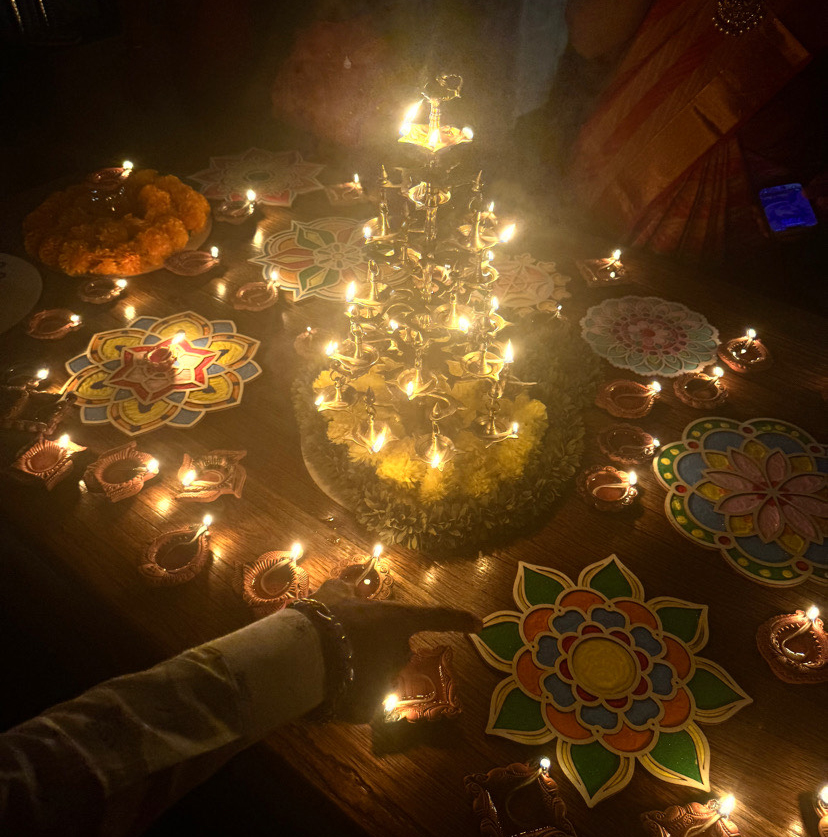
On the other hand, from the Hindu tradition, Diwali emphasizes the importance of light by having people light lanterns to drive away negativity from the previous year.
“Diwali is [in the] Fall,and is called the festival of light where we light a bunch of lights and it symbolizes the start of a new year,” said junior Mahika Gandla.
For some, they believe Diwali strengthens their spirituality and their recognition of culture.
“Diwali is one of the most iconic Indian holidays,” said junior Arya Bhargava. “It ties together my culture, my religion, and the bond I have with my family.”
Compared to the worldwide, party-like New Year’s Eve celebration in the U.S., Russian culture focuses on the importance of uniting family members and keeping relationships and memories alive as the year winds down and they celebrate Novy God, a secular celebration that adopts some aspects of a traditional Christmas. Many of the current Russian traditions emerged when the country was Communist and the government tried to eradicate references to religion during the traditional holiday period. They shifted many elements of Christmas, such as a decorated tree and giving gifts, from being about the Christian holiday to being non-religious elements of celebrating the new year.
“‘Horovod’ is a traditional Slavic circle dance often featured in Russian New Year celebrations, especially for kids around the decorated tree with Ded Moroz [Grandfather Frost] and Snegurochka [the Snow Maiden],” said senior Sanya Kozinsky. “[Novy God also] involves singing songs like ‘V Lesu Rodilas Yolochka,’ representing togetherness and bringing the old year’s worries into a magical circle before a fresh start. All of these things will never go away in my family.”
Although the Russian New Year (Novy God) happens on the same day as the more commonly celebrated New Year’s day, January 1, it focuses on a completely different representation of spirit and belief.
“The focus on family, shared food, and slowing down reflects our values the most,” said Kozinsky. “ It’s less about gifts and more about presence, memory, and starting the year connected to each other.”
While each of these celebrations may differ from what many at WHS think of when they hear “New Year’s,” the common link for all of them is the opportunity to come together with loved ones and prepare for the opportunity to start fresh in a new year.