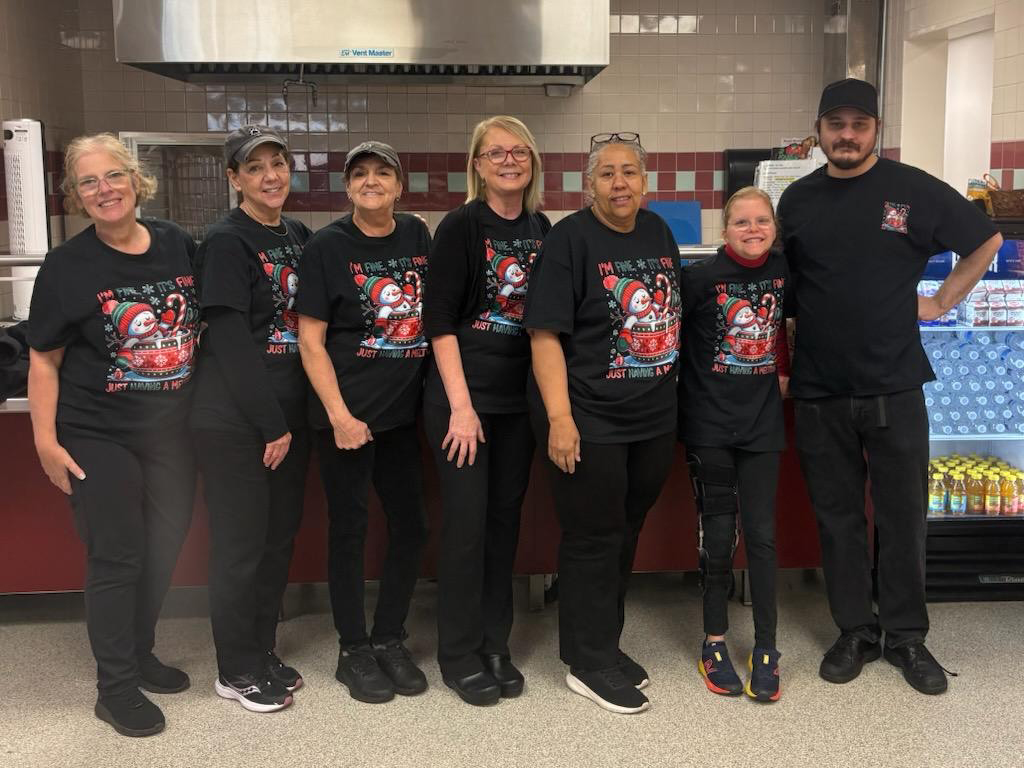
The kitchen staff are a vital part of the WHS community who serve students and faculty every day. While the bulk of their work often takes place out of sight, the impact of their preparation of healthy food is far-reaching into the school as a whole.
Before most students arrive at WHS for school in the morning, Peggy Paronian, the kitchen manager, is already hard at work. From 6:30 in the morning until 3:00 in the afternoon, Paronian ensures that meals are being diligently created and dispersed in an organized fashion to all students and staff like clockwork.
However, much of what the kitchen staff does happens behind the scenes.
“Tuesdays and Thursdays, I have a shipment coming in at 6:30, so I have to make sure that all the food is there and check it off,” said Paronian.
Managing the kitchen requires constant effort, organization and adaptability–something students can see on a daily basis.
“The kitchen team does well by keeping up with the amount of students that come into the cafe to eat everyday,” said sophomore Natalya Lucas. “They also have breakfast options every morning that allow kids to grab extra food before school.”
Many students have developed favorite options from the range of dishes served week-to-week.
“The nachos are just really good, and I don’t know why I like them, because the cheese is kind of plastic,” said sophomore Max Wong. “The buffalo mac and cheese is the best.”
Often the lunch environment can be affected by the lunch being served. Sometimes a popular lunch like buffalo mac and cheese or nachos causes the lunch to be quieter, whereas a not as popular lunch causes the cafeteria to be louder.
One of the most challenging aspects of being part of the kitchen staff is figuring out meals students like or dislike. While negative reactions from students can be discouraging, Paronian doesn’t take that personally.
“It doesn’t affect me when a meal is not popular,” said Paronian. “It just lets me know that we shouldn’t serve that meal again.”
Some students have mixed feelings about the meals, wishing they tasted more like the kinds of food one can find at take-out restaurants or other venues.
“I wish the food had a more developed texture or flavor, maybe even if the food was sweeter,” said freshman Nicholas Karavas.
While students might only see the finished meal on their tray, Poranian and her team must balance student preferences while maintaining health, not to mention the strict guidelines they must follow in order to meet the rules that govern what they serve. The state of Massachusetts sets guidelines about what foods can be served and how they are prepared, and these guidelines prevent the cafeteria from offering fried, high-sugar, and high processed carb foods.
“We can only sell certain cereals because they have to be low in sugar,” said Paronian. “Every student has to take a fruit or vegetable, too. It’s a lot, but we make it work.”
These state guidelines affect more than just the cereal. For example, the state guidelines require that entrees cannot contain more than 350 calories per serving, and that grain products must be at least 50% whole grain. All of this can make some of the options different from what students might eat at home or elsewhere.
Because students only interact with members of the kitchen staff, seeing them 1 to 2 times per day if at all, personal connections can be harder to create. Despite this limited contact, some students enjoy their daily interactions with the staff.
“One of the kitchen staff members makes an effort to always say hi and ask me about my day, ” said Wong. “We will talk about our weekend plans, and she seems genuinely interested in what I have to say. She is so nice.”
The community recognizes the entire kitchen staff’s hard work, effort, and kindness, even as they realize that it can be difficult for the staff to stay as positive as they do.
“They all try to be friendly with you. They are like a family,” said sophomore Flora Myers.“If I was them, I would get mad at the kids so often.”
When students were asked to describe the work ethic of the cafeteria staff, some of the most common words that appeared were, “Outstanding” and “Hard working” demonstrating just how much these behind-the-scenes but very important members of the staff are to the WHS community.