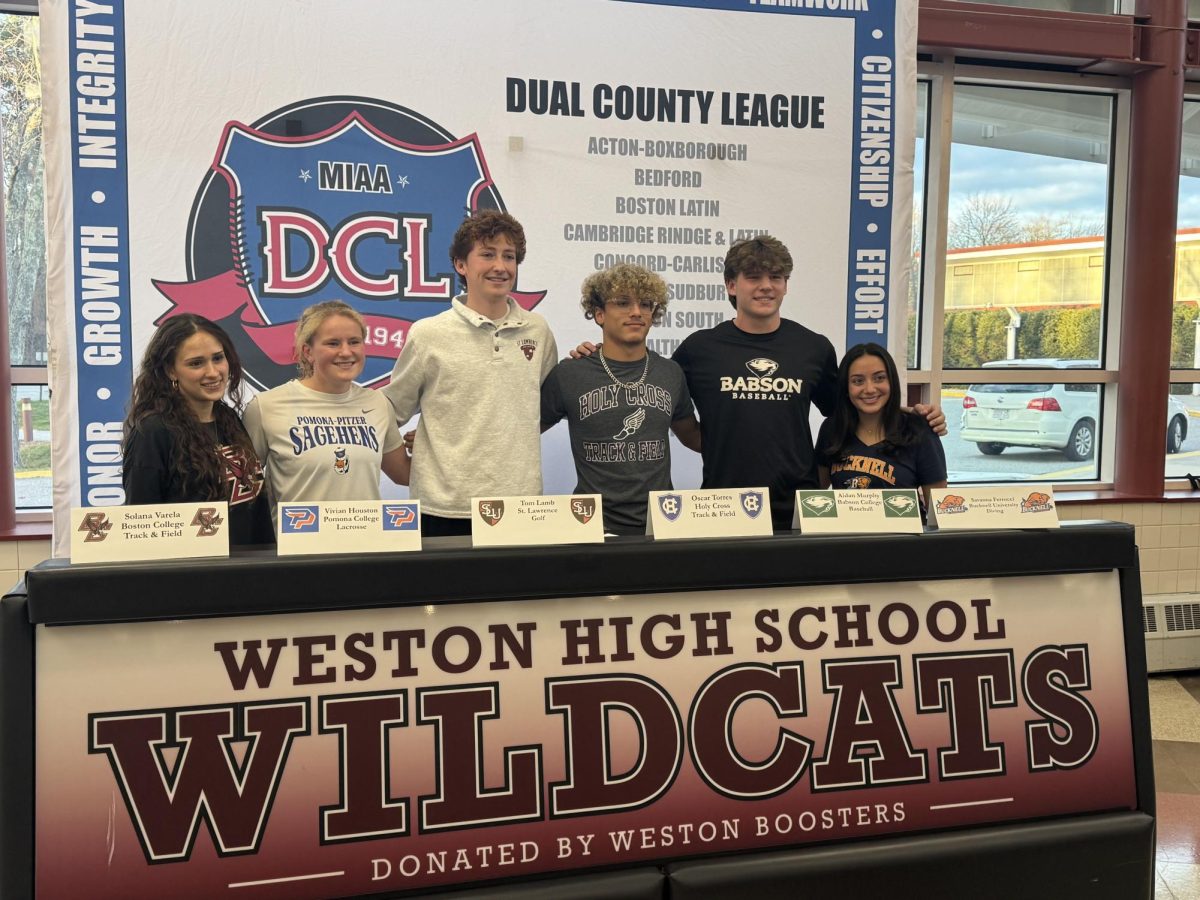
Each year, graduating high school athletes advance to the next level by joining Division I (D-I) college and university teams that demand intensity, discipline, and a deep commitment to their sport. This year, several Weston seniors are preparing to make that transition, and their experiences highlight the recruiting, pressure, and preparation that it takes to reach this point in their athletic career.
For many athletes, the path to D-I begins long before the process of college recruitment starts. Weston senior Solana Varela, who will compete in track and field at Boston College, has seen the impact of being surrounded by sports for many years.
“I wanted to continue [track] in my college career because it’s a big part of my life since I was little,” Varela said. “I enjoy setting goals for myself and this one has always been one.”
According to NCAA regulations, on June 15 of an athlete’s sophomore year, colleges may begin to reach out. Having participated in sports since a young age, many are ready to take that next step when the time comes.
“I started the process of reaching out to colleges last spring,” Leo Kirk, a senior and St. Bonaventure basketball committed athlete. “Going into a higher level of play, I feel for the most part I can’t really be scared. I’ve got to be ready.”
Before connecting with coaches and touring schools, many of these athletes have chosen the schools they would be interested in attending due to their strong programs in the athlete’s specific sport.
“I could see myself continuing my athletic career at Bucknell, so I stayed in communication with the coach,” said senior Savanna Ferrucci, who will become part of Bucknell’s dive team in the fall.
Family support and shared aspirations often shape how students approach athletics at the college level.
“All my siblings wanted to do sports in college, but never got the opportunity to,” Torres said. “My mom also loves watching me, so I am not only doing it for the love of the sport, but for the love of my family.”
Finding the right college fit requires more than athletic skill; for many another key criteria is the culture and community a school offers.
“St. Bonaventure stood out because people seemed very encouraging, and the campus felt very comfortable and connected,” Kirk said.
Since D-I requires a lot of commitment, athletes try to ensure that the team atmosphere that they will spend a lot of time around is one they can feel supportive.
“They treated me with respect and acted like teammates even when I wasn’t part of the team yet,” Torres said.
Even though competing at this top level means a lot of time is spent on one sport, athletes are still students at the colleges and therefore academics play a factor in this choice.
“I toured it and really liked the culture and the academic rigor,” Varela said. “I never thought BC would be a possibility for me until junior year when I had a really strong performance at a meet.”
Before athletes even leave WHS for their chosen college or university, they already feel some of the weight of their future plans; being committed to play sports as a senior in high school comes with the responsibility of being a role model to the younger players.
“It’s really inspiring to see Solana’s progression and her commitment,” junior Izzy Wheler, who trains alongside Varela, said. “It shows how what you put in pays off. Every workout she acts as if it was a race which shows her resilience.”
Students who have watched their peers’ athletic careers develop praise them for their work ethic.
“It’s amazing to see everyone’s commitments because of how hard people work,” said senior Teddy Dreyer. “Leo Kirk is a god and has an insane scoring ability. It’s something that you can’t even teach.”
Performing at a high level, as these athletes will do once leaving high school, means managing constant pressure. Having a routine before going out and competing can be helpful in mitigating any nerves.
“I do the same warmup routine every meet, and try to get in my own zone by having headphones on,” Varela said. “I imagine my race and what I will do.”
Staying in shape involves athletes staying consistent with athletic practices.
“I try to stay prepared by doing lots of workouts and staying busy with training,” Torres said.
Coaches also play an important role in preparing athletes for D-I competition Weston track coach Danielle Mitchell, who competed at Louisiana State University, has seen the challenge of college athletics firsthand.
“We were required to train six days out of the week, and when we were competing, we would train three days a week,” Mitchell said.
Coaching athletes for the next level involves not only training and practice, but also helping their athletes to prepare for what’s to come in the future.
“I help athletes by identifying what their goal is and whether or not they want to compete in college,” Mitchell said.
As their college freshman season approaches, athletes experience mixed emotions as they prepare for new challenges..
“I am scared to balance my academics with sports, especially when it comes to a college D-I level play,” Fer rucci said.
For Weston seniors, committing to a D-I school shows their dedication and continues to set the standard for WHS’s athletic culture.