In the sporting world, athletes are constantly trying to improve and achieve better personal statistics in order to ascend to the highest levels of competition. Sometimes it can be hard for student athletes to keep up the same motivation during the summer, making it one of those times when they can lose their focus on training.
“Just 2-4 weeks off from training can lead to a state of ‘de-training’ in terms of fitness and strength loss,” said Tara Hackney from Athletico Physical Therapy (athletico.com).
At WHS, most student-athletes try their best to avoid a decrease in their performances by keeping a high level of intensity while training during their offseasons. Those who don’t have specific training sessions with their coaches or teams are motivated by their personal goals to stay in shape, especially in the summer.
“I hope to improve my upper-body strength,” said junior Matthew Fitzgibbon. “So when cross country and track and field comes [in the fall], I can be race ready and ready to set new personal records.”
Success is always desirable for athletes, and the fear of failing to perform to their own standards is something that pushes many of them to stay fit.
“Not staying in shape would be very detrimental to my performance because I need to maintain my ranking,” said junior fencer Evan Kang.
Many student athletes work with personal trainers to improve their skills throughout the summer. This avoids the need for self motivation and focuses more on specific skill training, which also helps to improve their performance.
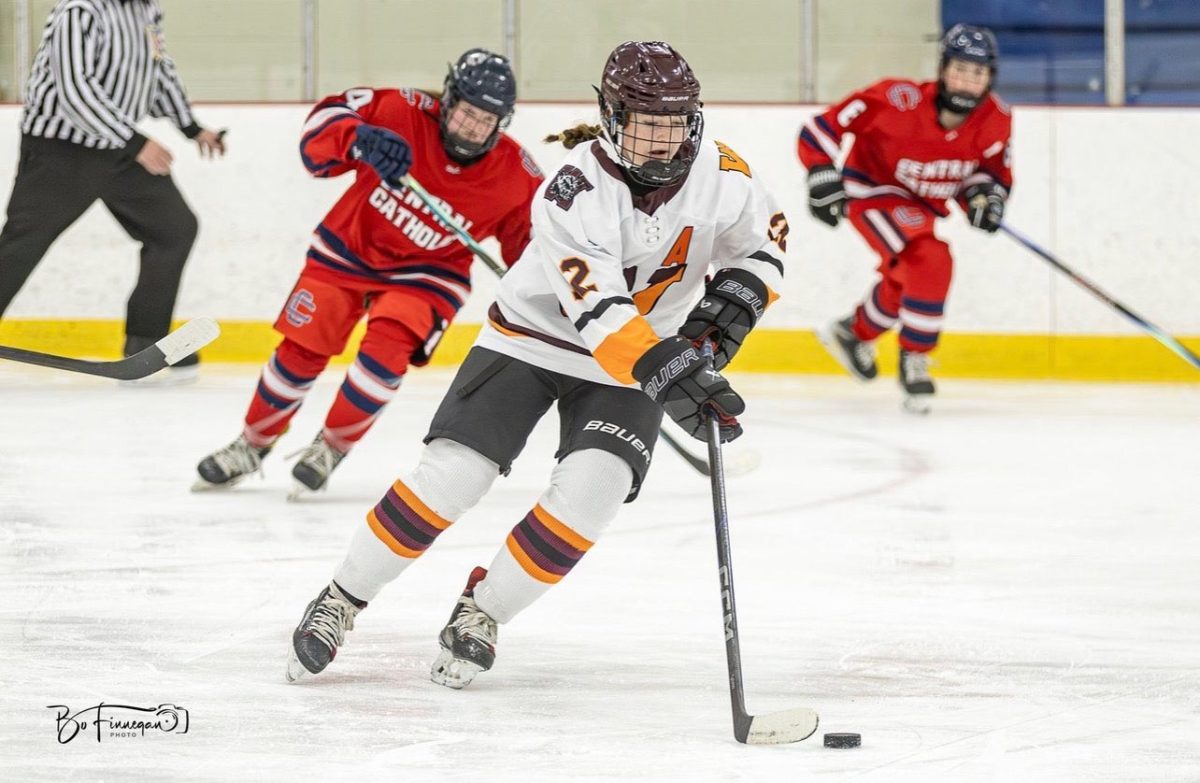
“I usually have a trainer that I go to two or three times a week,” said junior hockey and soccer player Kate Lamb. “We do workouts such as split squats and deadlifts to improve my strength.”
One of the highest achievements for a high school athlete is to continue their athletic journey in college, since only about seven percent of high school athletes make their way to play in college in Divisions I, II, and III. As recruiters for colleges are interested in seeing athletes perform well from the start of the year, this helps to motivate some to stay in shape over the summer.
“The idea of doing well and getting recognized by people like college recruiters motivates me to work harder,” said Fitzgibbon.
There are also less tangible benefits for athletes who set a goal and see it through over the summer. Student athletes who focus on training in their summer vacation can often recognize their progress in getting better and attaining more skills in their sports, which is why they remain consistent in their work ethic.
“Feeling confident in my athletic ability helps me perform better because then I know what I am capable of doing to stay composed,” said Kang.
Maintaining a clean diet is also important for staying in shape as it can have a positive impact for athletes on both their physical and mental health.
“A healthy diet plays a critical role in improving and maintaining high performance levels in athletes,” said WHS athletic trainer Andrew Rizza. “Proper nutrition supports energy production, recovery, muscle growth, and overall athletic performance.”
Studies show that athletes who increase fruit and vegetable intake while reducing meat and processed foods show a 21% improvement on exercise performance (pmc.ncbi.nlm.nih.gov).
“I eat at least three well-balanced meals a day, making sure I have enough carbs and protein for recovery and to fuel my energy,” said Lamb.
On the other hand, students that intensely work their bodies over the summer can also cause an increased risk of injury because the human body needs a balance between motion and rest. Experts advise that it is important for student athletes to have moderate amounts of training paired with a generous number of rest days to prevent starting their fall seasons with a higher risk of injury.
“The most common injuries we see are overuse-related orthopedic injuries,” said Rizza.
In order for muscle groups to grow, it is important to train them, but also important to rest them. Overusing muscles can also prevent the muscles from growing, and resting can help increase the growth rate.
“Intense exercise creates tiny tears in the muscles. Over time, as muscles heal, they eventually grow bigger and stronger,” said Dr. Karin Van Baak of UC Sports Medicine (uchealth.org).
As muscles can only heal and thereby strengthen during periods of rest and recovery, experts recommend any training periods to involve a balance of exertion and downtime, so even student athletes should take some of their summer off from intensive training and enjoy the season.