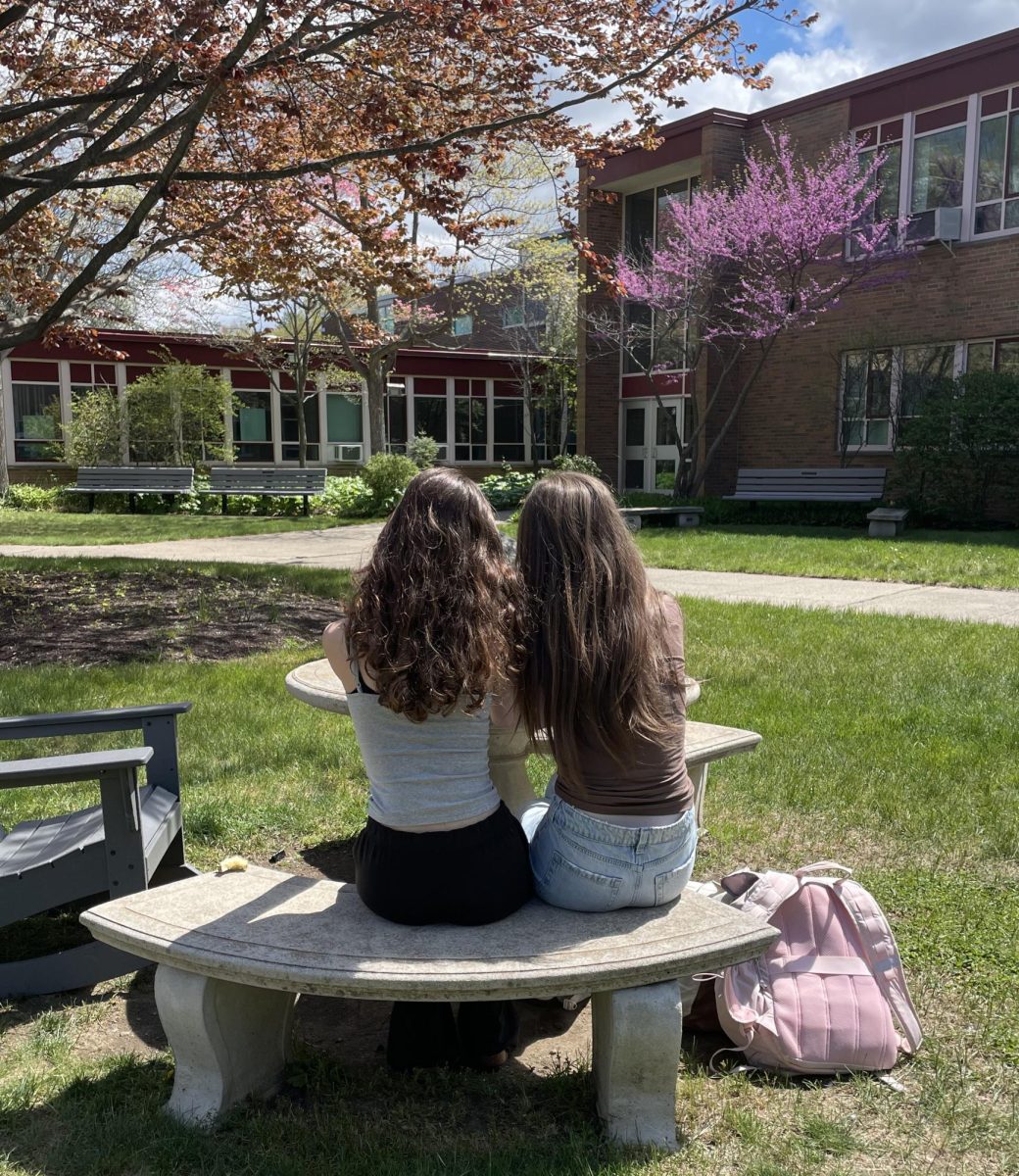
As sunshine, brighter days, and summer weather arrives at WHS, students and faculty feel happier and notice improvements in attitude, which also leads many to have a greater focus on the outdoors and its various benefits.
“My mood has improved so much,” said freshman Lillian Ridge. “I find myself smiling more and I love feeling the sun on my skin.”
Research correlates improvements in mood to time spent outside during this time of year as the weather changes and people get outdoors.
“One of the biggest benefits of spring is the increase in sunlight, which naturally boosts mood and energy levels by enhancing vitamin D production,” according to the University of Nebraska’s “HealthierU” newsletter, (https://healthieru.unl.edu).
Spending time outdoors can also significantly benefit a person’s mental health.
“Being outside is very calming, and it reduces my anxiety,” said senior Michael Lappi.
More specifically, spending time outdoors reduces school-related struggles and stress.
“School stresses me out a lot, and I feel so cooped up after sitting for five hours a day,” said Ridge. “Going outside makes me feel better, relaxes me, and reminds me that not everything is about school.”
Engaging in physical activity while going outside, like outdoor walks, can be very beneficial to a student’s focus. Because of this, some teachers include time outside in their class routines.
“I incorporate walks into all my classes because adolescents can only continue to re-focus the mind for approximately 15-20 minutes at a time,” said health teacher Danielle Cooper. “After this period, to continue to learn, we need to stand up and create movement.”
Teachers also choose to take outdoor walks with their classes for other reasons, one of which is building peer-to-peer relationships and social connection.
“I [and my classes] go over to the reservoir next to the middle school,” said physical education teacher Jason McCarthy. “Students are able to walk with their friends and chat about whatever they want to.”
Even outside of school, many people enjoy going for walks in nature for the same reason of connecting with others socially.
“When [walking with] my family or a friend, it’s a good time to catch up,” said junior Audrey Schleimer. “I feel like walking helps with talking.”
Others enjoy taking walking to the next level by going on hikes or even camping, and find these activities to be both stress-reducing and socially engaging experiences that can help with the common struggles of school.
“Hiking and camping with my friends makes me feel very calm, happy, and connected to nature,” said Lappi. “School is a lot of work, and hiking and being outside helps me to relax.”
These are not the only outdoor activities that people enjoy and feel the benefits of due to summer weather. Grounding, also known as earthing, is a practice that is coming up more and more at WHS.
“Grounding or earthing refers to direct skin contact with the surface of the Earth, such as with bare feet or hands,” stated the National Institute of Health’s PubMed Central, (https://pmc.ncbi.nlm.nih.gov).
Some students enjoy grounding and recognize its many benefits.
“[Grounding] makes me feel so good, and it rejuvenates my body,” said Ridge. “It is so calming and so healthy for your body.”
Additionally, research shows that the reason people find joy in grounding is because of numerous other proven benefits.
“Grounding appears to improve sleep, normalize the day–night cortisol rhythm, reduce pain, and reduce stress,” according to PubMed Central.
As a result of some of these advantages, some people incorporate grounding into other health-related routines.
“I have [grounded] as part of meditation and mindfulness practices,” said Cooper.
Although grounding can be very helpful for a person’s health, there are also risks associated with it, especially if one walks barefoot in unknown terrain.
“You could step on something that would hurt your foot really badly, and on top of that there are ticks and other bugs all around,” said sophomore Arian Ayaviri.
For those looking for simpler ways to enjoy nature, outdoor breaks and activities throughout the school day can be beneficial for many different reasons.
“Since we’ve been inside together for so long, when we go outside everyone has their own spaces, and they’re able to spread out,” said McCarthy. “ This positively affects their mood and their behaviors.”
There are various advantages of sunshine and summer weather that benefit both WHS students and faculty, but some of the biggest impacts are the simplest.
“The summer weather and more time outside is making students and teachers happier,” said Ridge. “The nicer weather puts everybody in a good mood.”