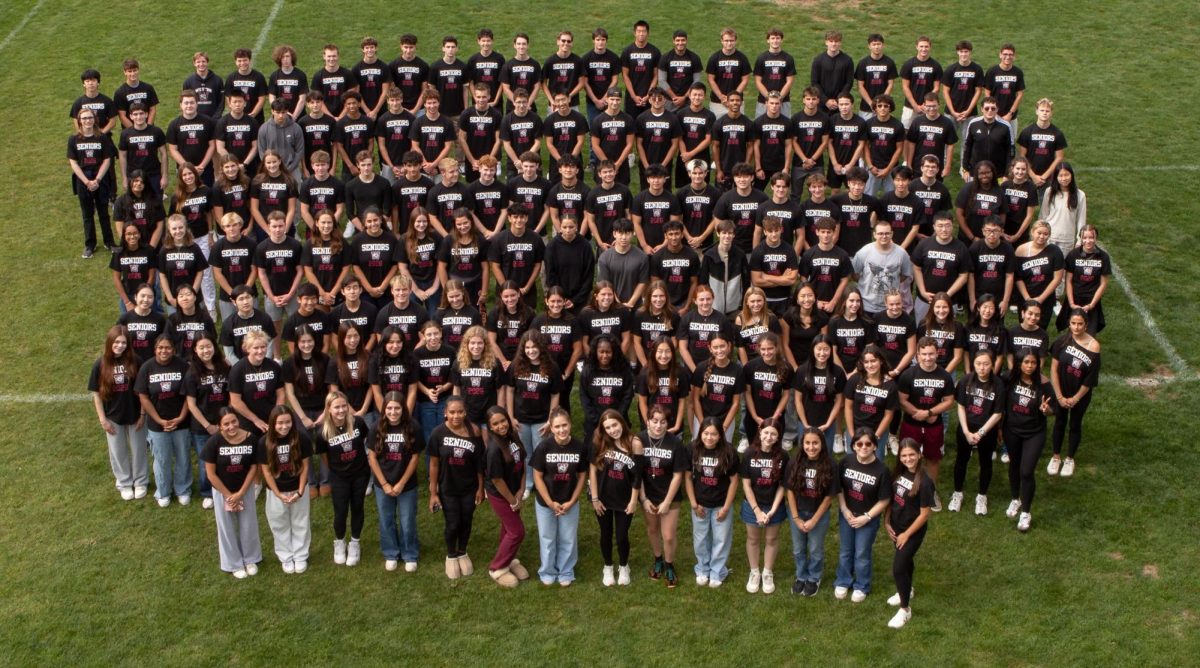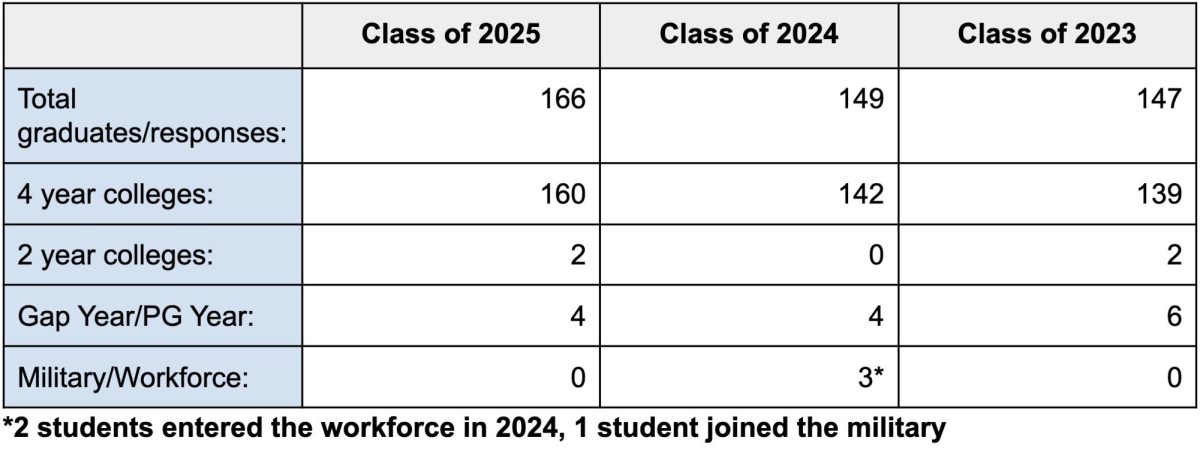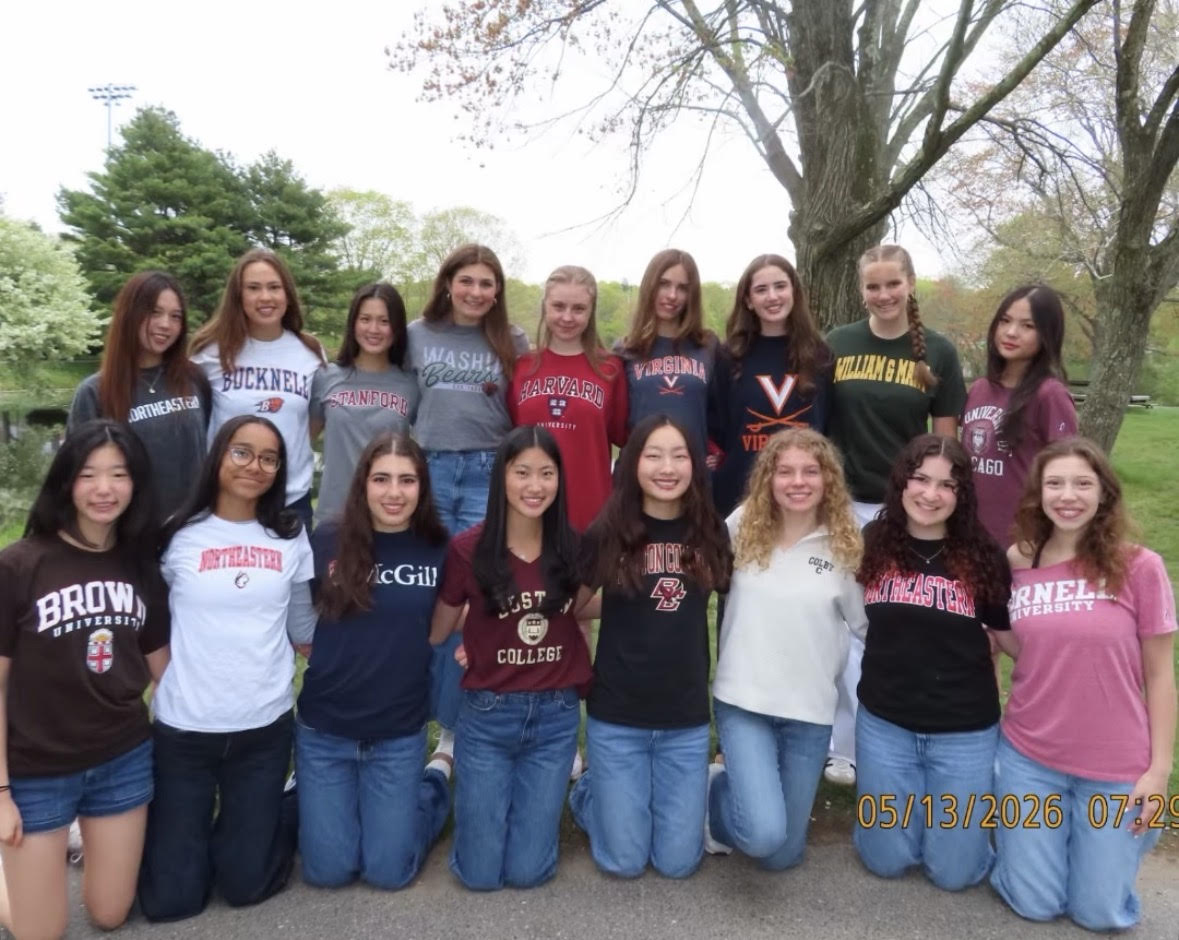
As the school year comes to an end, most seniors have made one of the biggest decisions of their lives so far: which college they will attend. Whether it be due to the reputation of the school, the campus, the distance from home, the sports programs, and or something else, students have prioritized different elements of the next phase of their education when deciding what school to attend.
By this point in the year, many seniors have been considering which college they wish to go to for a long time.
“Freshman year I started to really think about what schools I wanted to look at,” said senior Riley Huml.
Some seniors focused not only on the next four years of school, but also on their lives after that.
“The reputation [of the college I chose] mattered because I want to be able to get a good job out of college,” said senior Isabella Fleming.
Another factor students consider in the decision making process is the college’s athletic programs, which can be especially important for student athletes.
“[I decided based on] whatever school was a good fit for volleyball,” said Huml. “I ended up only applying to one school because I committed, but it had high academics [and] I really liked the team sports.”
Students think about balancing the academic potential of the school with the academic opportunities when deciding on a college.
“I mainly applied for athletics because I wanted to pursue sports in college,” said senior Sehbu Parsekian. “[I also considered] the field I wanted to go into, which is mainly STEM, so I wanted it to have good labs.”
Some faculty members reflect and think back on the importance of the fact that being successful in the workforce doesn’t always mean going to an extremely prestigious school.
“I was personally very motivated by the prestige of the school [during high school], and in the moment, it feels like it means everything,” said guidance counselor Luke Townsend. “But your success after college has more to do with who you are and the opportunities you’ve taken advantage of.”
Other members of the WHS faculty stress that the prestige of the school shouldn’t be the only factor that determines a student’s decision.
“Even if it is Harvard or Princeton or some sort of Ivy League institution, that doesn’t necessarily mean it’s the best fit for you because of your learning style or what you hope to major in,” said English teacher Erin McCarty.
Students and faculty emphasize elements of personal fit when it comes to college decisions, such as the school’s proximity to home.
“I realized after visiting that I didn’t want to fly to college because I wanted to be able to drive home for a long weekend or something,” said Huml.
Another reason students select the college they do is because of the school grounds.
“I would say that having a pretty campus definitely helps because you’re going to be living there for four years,” said Fleming.
Those who have watched many seniors go through this process over the years have seen that the most successful outcomes for their former students came about when students make their college decisions based on what they want and not the opinions of their peers or others.
“I think that sometimes kids feel pressure when they hear where everyone else is applying; that impacts where they choose to apply, and it’s not necessarily the best school for them,” said McCarty. “You have to think about what you care about because four years from now, you’re not going to care about the opinions of the people sitting in your high school classroom with you.”
While the overall process of choosing the best college or university can create a lot of tension during students’ senior year, there are adults at WHS ready to help narrow down the options to match a student’s needs to the school that can best serve them.
“Stress is a very normal part of the process,” said Townsend. “I think the best way for students to eliminate a lot of that stress is to ask questions to their counselors and get the most accurate information possible.”
As the members of this year’s senior class depart WHS and prepare to attend the schools that emerged as their best choice for the next four years, they have recommendations based on their experiences to pass on to the rising seniors.
“My advice is to not have your heart set on one college because you never know if it’s the right fit for you,” said Fleming. “I truly believe that wherever you end up is meant to be.”