As fidgets make a popular reappearance at WHS, students and teachers debate if fidgets are beneficial or negative in relation to student learning. I believe that fidgets are extremely valuable to students’ education, whether it be through helping a student focus or assisting in emotional regulation.
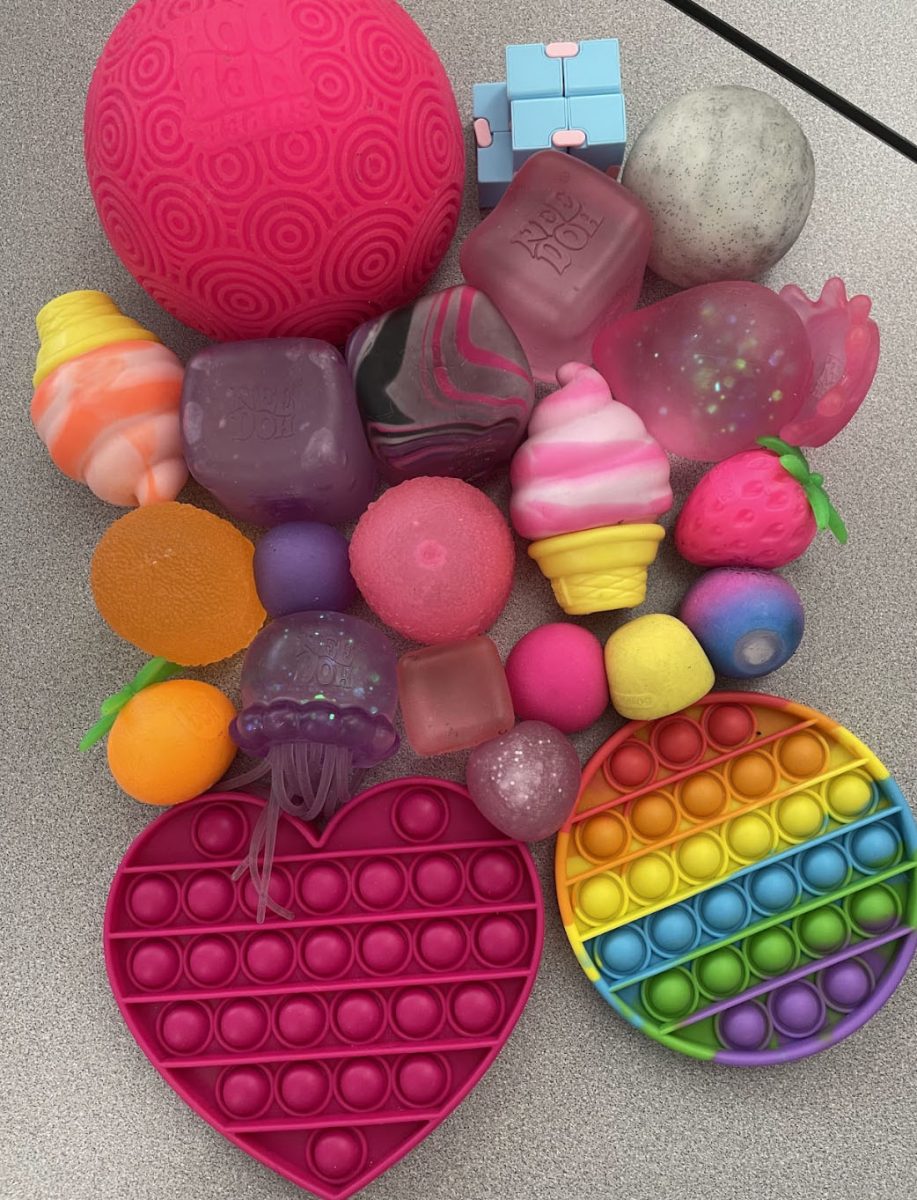
Recently, a specific type of stress ball fidget, called a Needoh, has become increasingly common in the hands of students at WHS. As an avid Needoh collector, I feel that this toy helps other students and me to stay on task during class, while not making noise or distracting others.
“My favorite [fidgets] are the Needoh Nice Cubes, because they help me focus in hard classes,” said freshman Aryana Kafi. “They also help me to pay attention while having something to squeeze.”
Similarly, I think fidgets help me and others to stay attentive to classwork without daydreaming or becoming distracted.
“It helps me learn better, helps me to pay attention, and helps me with my school work, “ said junior Charlie Wiener. “I can’t pay attention without the Needoh. I just need it.”
I believe fidgets are especially helpful in classes that feel overwhelming or stressful, providing a way to manage and cope with those emotions.
“I think it’s a good channel for anxious feelings,” said special education teacher Allison Bees. “You can actually release some of your tension and your anxiety and your energy through the things that you’re holding and using.”
Furthermore, research shows that using fidgets when experiencing anxiety can be especially helpful. Because of this, I think that fidgets are particularly useful in pressured situations such as tests, quizzes, and graded discussions, as they can provide students and myself with a distraction from these anxious feelings.
According to brownhealth.org, “For children who are feeling overwhelmed in some way, using a fidget tool can help them focus their attention and energy into a calming fidget tool as a way to help relax, regulate and ground their bodies and minds.”
On top of fidgets assisting in emotional regulation, I also believe fidgets allow for students to redirect excess energy in a healthy and appropriate way throughout the school day.
“[Fidgets] allow my body to release pent up energy instead of tapping my foot or finger, which would distract me, and people around me,” said sophomore Andy Ding. “I can release the energy in a quiet and fun way.”
Although I believe fidgets are helpful tools in education, some studies highlight certain fidgets as a distraction rather than a tool.
According to a study from 2019 published in the journal “Applied Cognitive Psychology,” “Students watched educational videos while either using a fidget spinner or not. Using a fidget spinner was associated with increased reports of attentional lapses, and diminished judgments of learning.”
While this study supports the reputation fidgets have for distracting students, I believe that when they are used appropriately, in a quiet manner, they aid in student learning and attention.
“I think it’s all about teaching students how to use [fidgets] appropriately,” said Bees. “There are rules that go along with that. And if students are able to follow those guidelines, I fully support [fidgets].”
Teachers can also see how fidgets can assist in classroom management, specifically in keeping students in class. I can relate to this, as when I have a fidget I feel less tempted to take frequent breaks during class time.
“Having fidgets decreases the amount of walks [students] need to take and helps them be in class, and stay there,” said math teacher Rebecca Walz.
In addition to fidgets being beneficial for classroom management, I believe that fidgets are specifically helpful to those with ADHD. According to a study published by “Behavior Analysis in Practice,” “When using stress balls, students were distracted fewer times and had higher scores on the written expression assignment, with higher gains for the students with ADHD.”
The studies on the beneficial effects of fidgets for those with ADHD also match teachers’ experience on how fidgets affect classroom environments.
“I definitely think that a lot of students with ADHD feel like [fidgets] help them a lot just because it’s really hard to focus on one thing in class and not feel like you want to get up and do other things,” said Walz.
Students confirm this correlation between maintaining attention and using fidgets.
“Fidgets help me focus in class because they stimulate my brain, which then increases dopamine and norepinephrine,” said sophomore Eila Kakkar, a student with ADHD.
Considering all of the advantages to fidgets, I strongly believe that once appropriate expectations are set for the use of fidgets, that students should be welcome to use Needohs and other fidgets in all classroom spaces.
“The benefits of using fidgets are wonderful,” said Kafi. “They are a great resource that keep me on track when I’m not focused.”