Staying up for hours studying, canceling plans, and telling yourself you’ll “relax after 30 more minutes” has become a normal part of student life. Even when I dedicate hours to prepare for a test, I still sometimes don’t succeed. I think this disconnect between effort and outcome reveals a bigger truth: students and teachers spend time in the same building, but in completely different realities.
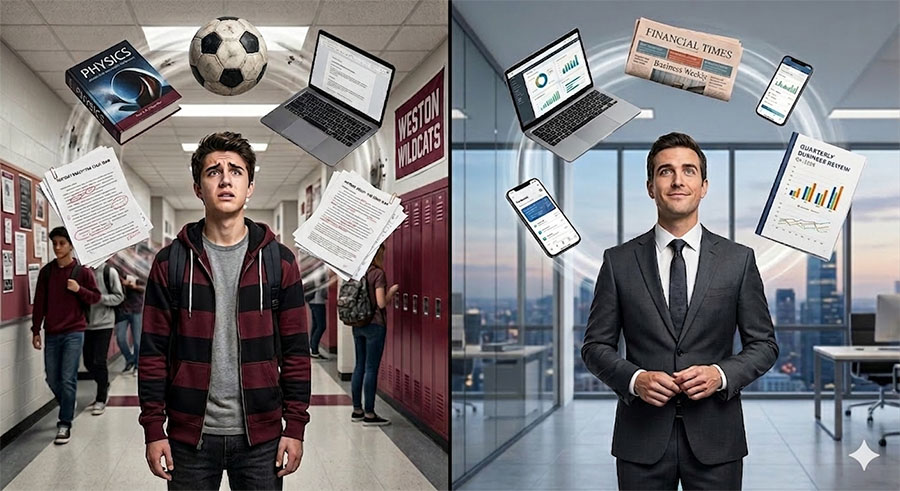
Teachers assign work thinking it will be quick. But for me, even a “few minutes” can feel endless when I am juggling other classes, jobs, and sports. What is labeled as a simple task often turns into hours of frantic focus and half-panicked Googling.
“Sometimes a 15 minute assignment can take me up to an hour,” said senior Alexa Theriaque. “I know teachers don’t think it takes that long because they never intend to give us that much work, but it does.”
I think grades are where the reality gap becomes the most intense. Teachers often see grades as data, a way to measure performance and guide improvement. However, for many other students and me, we see them as evidence that the universe has personally singled us out. While some teachers are aware of this student perspective, it is not always fully addressed in the classroom.
“Most of my students inherently see their sense of worth and value tied to their grades,” said science teacher Zechariah Tan.
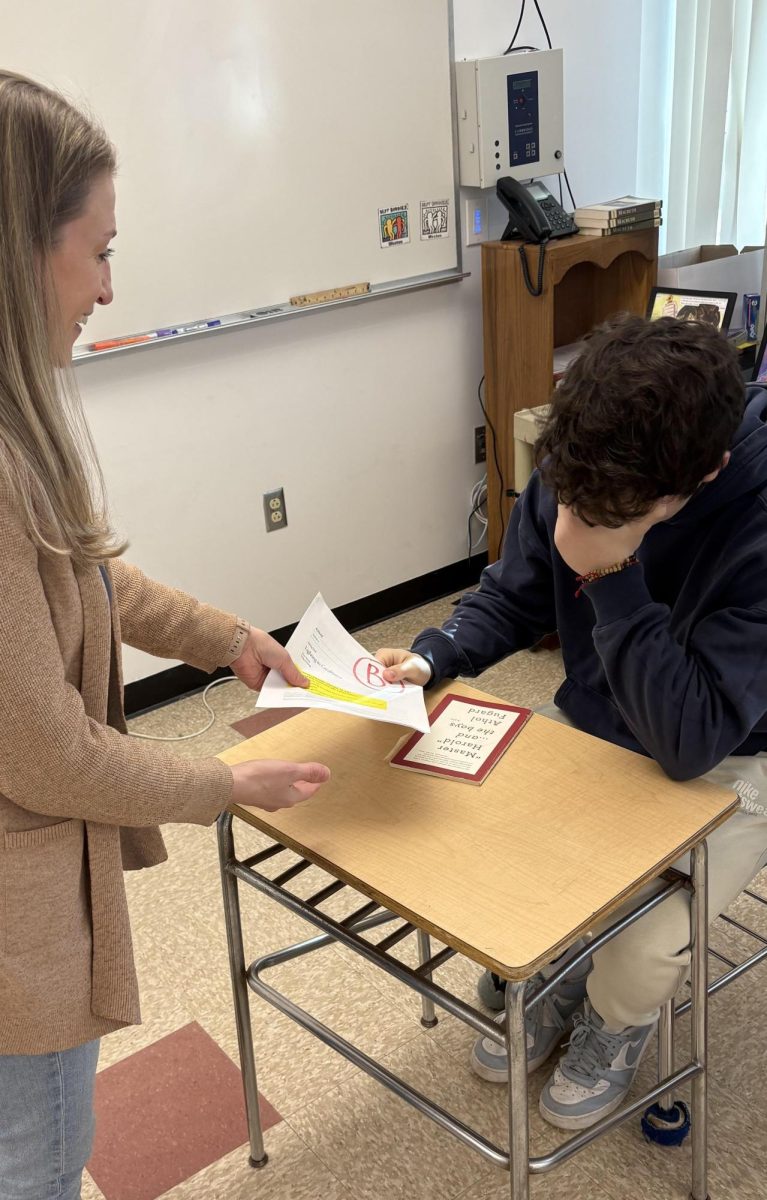
I believe this student mindset is why a low score can feel catastrophic. A bad grade doesn’t just feel like feedback; it feels like proof that you’re falling behind, even if logically you’re not. Students typically have a very different sense of what a “bad” grade is as compared to what teachers believe.
“In Spanish, I consider anything below a B+ bad,” said junior Oliver Levitt.
I think the scariest part is how much weight a single grade seems to carry. A bad grade means a bad future in my mind, and others at Weston agree.
“I associate my grades with college,” said senior Leanna Dinno. “If I get a grade that isn’t my best, I automatically assume that I am not going to get into a good college.”
For me, receiving a B+ seems like the end of the world because it seems to predict my final grade, which I worry might look “bad” to colleges – even if teachers see it differently.
“I would actually say a B+ is very good, except that students think that grade tells them if they will be successful as an adult,” said English and drama teacher Anne Isaacs. “That is what can get really frustrating for high school teachers: we feel like we don’t have any control over [student perception of grades] because of how much is dictated by the collegiate world.”
I believe external pressure on students turns school into a survival challenge rather than a learning opportunity. Whether it’s college stress, family expectations, or self-doubt, it can feel like every grade carries your future attached to it.
“My biggest fear when I get a bad grade is definitely my parents,” said sophomore Kyle Xu. “They have always pushed me to do better, and one bad grade means punishments and consequences. This impacts my grade both in positive and negative senses.”
I think this is why students don’t just “get over it” after one bad grade. Even if we’re laughing five minutes later, it still sits in the back of our minds like a notification we can’t clear.
Sometimes when a students get a bad grade, is worrying about one on an upcoming test, they email their teacher. But these messages aren’t casual, atleast for me, each one feels like a plea to a judge. I reread it multiple times, trying to sound calm and mature while hiding the panic that my grade just plummeted, because it feels like the only way to regain control. Teachers may not realize how stressful these emails are to write.
“Taking a look over the past month, I’ve had about 20 emails from students related to their grades,” said Tan.
When students are that overwhelmed, it’s harder to feel excited about anything extra in class. I also think teachers genuinely try to make classes engaging, even if students don’t always experience it that way. At this point, if someone says “this will be a fun activity,” my first question is whether it’s graded.
“My priority for making class more fun and engaging is to try and connect with students to get to know them and to find out what types of learning activities help them learn in fun and engaging ways,” said history teacher Deborah McLoughlin.
I believe students don’t always give teachers the credit they deserve. Entertaining a room full of teenagers while properly educating them is a nearly impossible mission, especially when half of us are exhausted and the other half are pretending they’re not.
“Another priority of mine is trying to vary the learning activities that we do in class,” said McLoughlin.
I think the problem is that even when teachers try something creative, if I’m running on four hours of sleep and caffeine, I’m not going to feel joy during a “graded discussion,” even if the teacher calls it educationally engaging.
“I personally like group work if I am with my friends,” said Levitt. “Games can be good, but [in my perspective] generally teachers don’t pull them off very well.”
I think the most frustrating part is that students aren’t lazy, we’re overwhelmed. A teacher might see one assignment. Students see seven. Teachers might see one grade. Students see their entire future flashing before their eyes.
“Teachers need to be more lenient, being more mindful that we have work in every single one of our classes,” said Theriaque.
I believe students and teachers are never going to experience school the exact same way, because teachers are understandably focused only on their classes and will never understand all the other pressures their students experience daily. The best solution, in my opinion, is more understanding on both sides. Everyone should remember that nobody is trying to ruin anyone’s life – even if, during finals week, it really feels like they are.