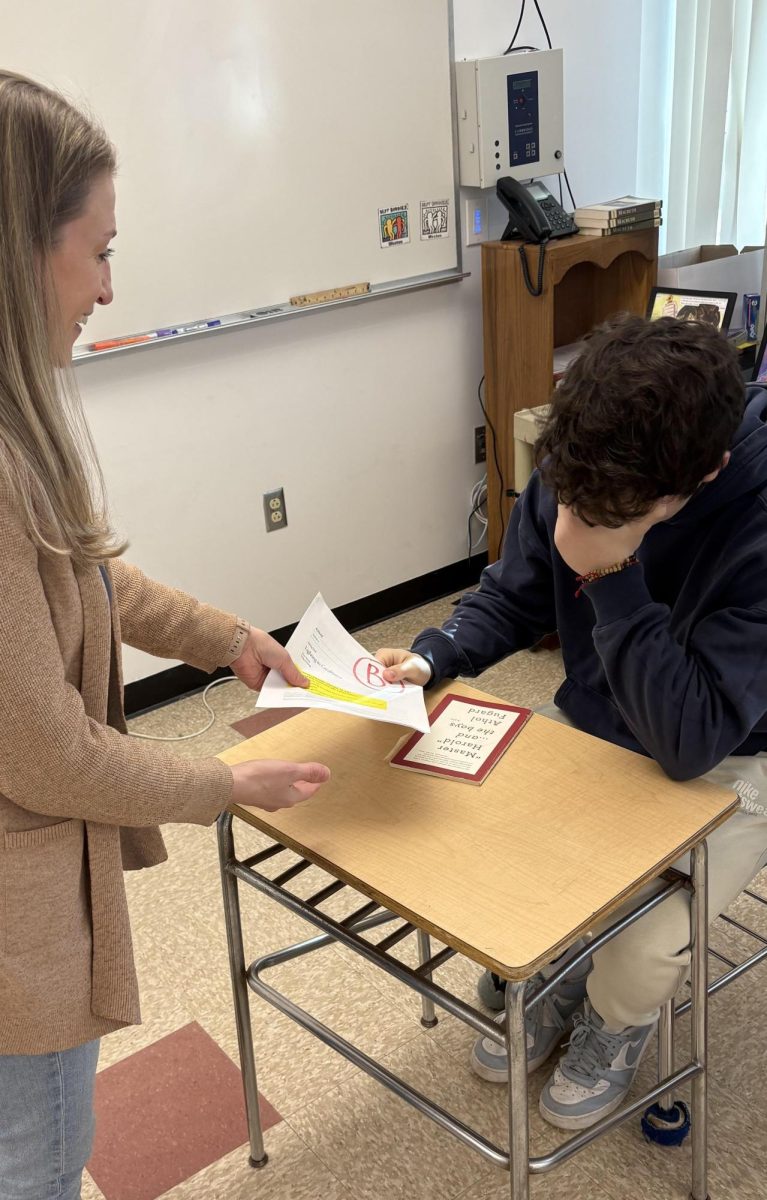
Every year students at WHS have to decide whether they want to take AP classes even if they hope to attend colleges that they know won’t accept AP scores for course credit. I believe that students should still take AP classes even if they do not plan to take the exam because the classroom experience provides critical thinking skills and rigorous academic work that better prepares students for college, which is more valuable than any single test score.
Many students focus too much on the AP exam and miss the real benefit, which is learning college-level material and building critical thinking skills throughout the year.
“I think AP classes are a great way to challenge yourself and go more in depth on a topic,” said junior Phin Shanahan.
In my view, the rigor of a student’s coursework matters more to colleges, especially since AP scores do not have to be reported on applications. Taking AP classes proves a student’s ability to manage challenging material over time, which is much more relevant to college readiness. Those who advise students on college decisions agree with me.
“[Colleges] are more interested in whether you sat in an AP classroom with an AP-certified teacher and experienced the rigor of that class,” said guidance counselor Luke Townsend. “That’s a clearer indicator of the type of student you’re going to be.”
Despite this, I think many students still feel strong pressure to take the AP exam because of the expectations surrounding AP courses at Weston. From my perspective, that pressure often creates the fear that skipping the exam means missing an essential credential, even when the class itself already demonstrates academic rigor.
“Teachers definitely encourage you to take the exam if you’re taking the class,” said guidance counselor Christopher Shanahan. “But you still learn a lot from the class even without it.”
I think Weston’s policy of not requiring the AP exam gives students an important sense of control over their academic experience.
“It’s nice that students can decide for themselves whether the exam is worth it,” said junior Eric Cui. “Everyone’s schedule and priorities are different, so having that choice helps.”
One issue that could be adjusted to make students feel less pressure about taking the test is that the structure of many AP classes makes students feel like the exam is the entire point, even though the learning goes far beyond test preparation.
“A lot of the class is built around the format of the AP exam,” said junior Afraz Rafan. “Like in APUSH, we spend time practicing the types of questions that will be on the test.”
This reality may make some students who don’t want to take the exams question whether an AP class is the best fit for them. While that logic has merit, in my opinion, the broader value of AP classes is what taking them demonstrates about you as a student.
“Admissions counselors like to see students who are taking AP classes and doing well in those classes,” said Townsend. “A high exam score just confirms what the grade already shows.”
I believe that for students balancing academics with activities and responsibilities, skipping an AP exam can be a healthy and reasonable choice. I’m also not the only one who thinks the AP exam isn’t the only measure of learning; some students choose to skip the AP exam entirely and focus instead on learning the material.
“I [didn’t] take the AP exam, but I still learned a lot from the class,” said Cui. “I think finishing the coursework shows I can handle challenging material without worrying about the AP test.”
Beyond college preparation, AP classes also give students skills they can use in the future, like time management, independent thinking, and problem-solving. These lessons matter long after high school.
“AP World really made me manage my time better and reduced my procrastination habits,” said Cui. “Even though I didn’t take the exam, I learned skills I know I’ll use later.”
Ultimately, I think AP classes should be seen as opportunities rather than obligations. When students choose challenging courses because they genuinely want to learn more, they are more likely to stay engaged and get the most out of the experience.
“AP classes give you the chance to challenge yourself and really get into a subject you’re interested in,” said Christopher Shanahan. “You end up thinking about the material more deeply than you would in a regular class.”