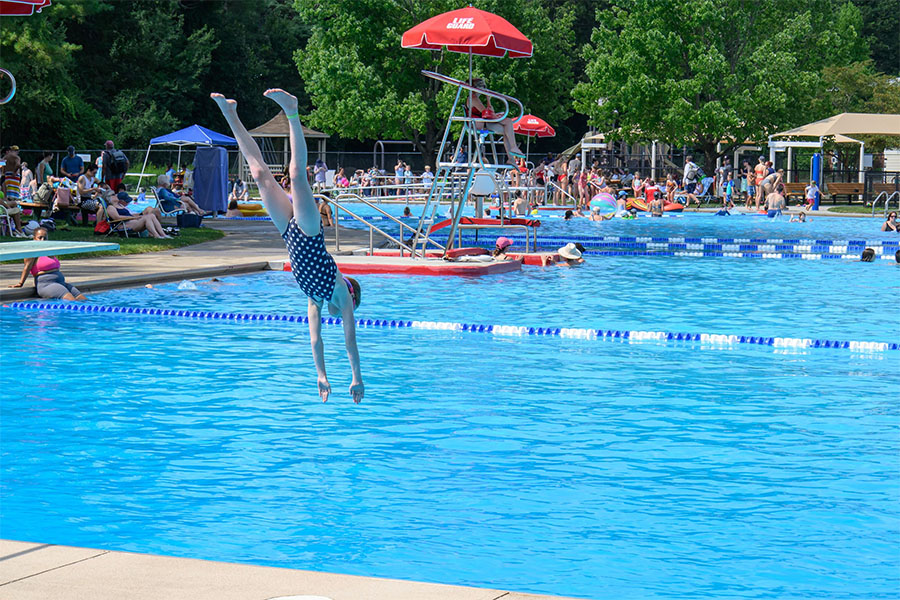
During the summer, the splashing of water and distant laughter fills the air at Weston’s local pools. Scanning the water with practiced focus while being perched in chairs above the action, Weston High School students are hard at work. Lifeguarding has become one of the most popular summer jobs among the student body at WHS, as student lifeguards gain valuable work experience while working hard to keep swimmers safe.
While lifeguarding is a typical teen job in the summer, the actual reasons high school students choose to go through all the training for this important job are varied.
“I wanted something that would actually feel worth my time,” said junior Sloan Berry, who began lifeguarding last summer. “Compared to other jobs my friends had, the pay was definitely better, and I liked that I could work full shifts and really make the most of my day.”
Equally important is the flexibility that the lifeguarding schedule offers. As staffing the town pool or other larger swimming locations requires a lot of lifeguards, schedules can often be adjusted as needed.
“You can usually choose your shifts or swap with someone if a conflict appears,” said sophomore Gigi Kaden. “It’s structured but it’s not rigid, and that makes a big difference when your schedule changes a lot.”
Beyond pay and scheduling, students consistently point to the experience itself as a major draw. Long hours spent by the poolside often foster a sense of community.
“You end up working with the same group of people all summer,” said junior Anna Sopcik. “By the end, it feels like a team. We hang out during breaks and overall create friendships.”
Despite its appeal, becoming a lifeguard requires a clear and sometimes demanding certification process.
“Lifeguards require comprehensive training in water rescue and first aid, while exhibiting leadership, communication and problem-solving skills. Lifeguards must be proactive to prevent injury or illness, quick reactors in an emergency, and vigilant to face adversity professionally,” stated the American Red Cross (https://www.redcross.org).
Many people who haven’t chosen to pursue this job opportunity don’t understand the extent of these requirements.
“I feel like most people think that becoming a lifeguard is pretty straightforward, but there is much more to it than people think,” said junior Vaughn Ewins.
Another misconception of the job is that it’s just a relaxing way to hang out in the sun, which those who have done the job know is far from the truth.
“I think that most of the difficulty comes from the pressure of people’s lives being in your hands,” said Ewins. “I’m a lifeguard at a kids summer camp, and that comes with a lot of pressure as daily you have to manage around 30 kids in the pool at once who are anywhere from five to 11 years old.”
The seriousness of the job is reflected in the final requirements to become certified: lifeguard candidates must pass both written and practical exams and are required to demonstrate skills in water rescue, CPR, AED use, and first aid before they can become certified.
Despite needing to be ready for any crisis, the day-to-day environment of lifeguarding encourages a mix of attentiveness and calm. While lifeguards must remain observant, there are quieter intervals that allow for reflection.
“Its not always chaotic,” said Sopcik. “There are moments where you’re just watching the water, being focused but also enjoying the summer air.”
While lifeguarding is traditionally viewed as seasonal, the credentials open doors to steady employment throughout the school year.
“A lot of people think it’s just a summer job, but you can keep doing it,” said sophomore Flora Myers. “Once you are certified, indoor pools are looking for guards year long.”
As summer winds down and students return to classrooms, many carry with them more than just a paycheck. The skills they have developed such as awareness, discipline and team work extend beyond the pool deck.
“Lifeguarding teaches you responsibility and how to work with others under pressure,” said junior Sophie Belotte.
Those transferable skills are what most current WHS students who lifeguard feel is one of the main benefits.
“You start the summer looking for a paycheck, but you leave with leadership skills that set you up for whatever career comes next,” said Myers.