For Weston High School graduates, the path they will take is often assumed to follow a familiar direction: straight to a four-year college. Nationally, however, students are pursuing a wider range of options after high school. According to the U.S. Bureau of Labor Statistics, 62.8% of 2024 graduates enrolled in college with about two-thirds of that number attending four-year colleges, while the rest attended two-year colleges.
Recent data from WHS does not reflect the same trends.
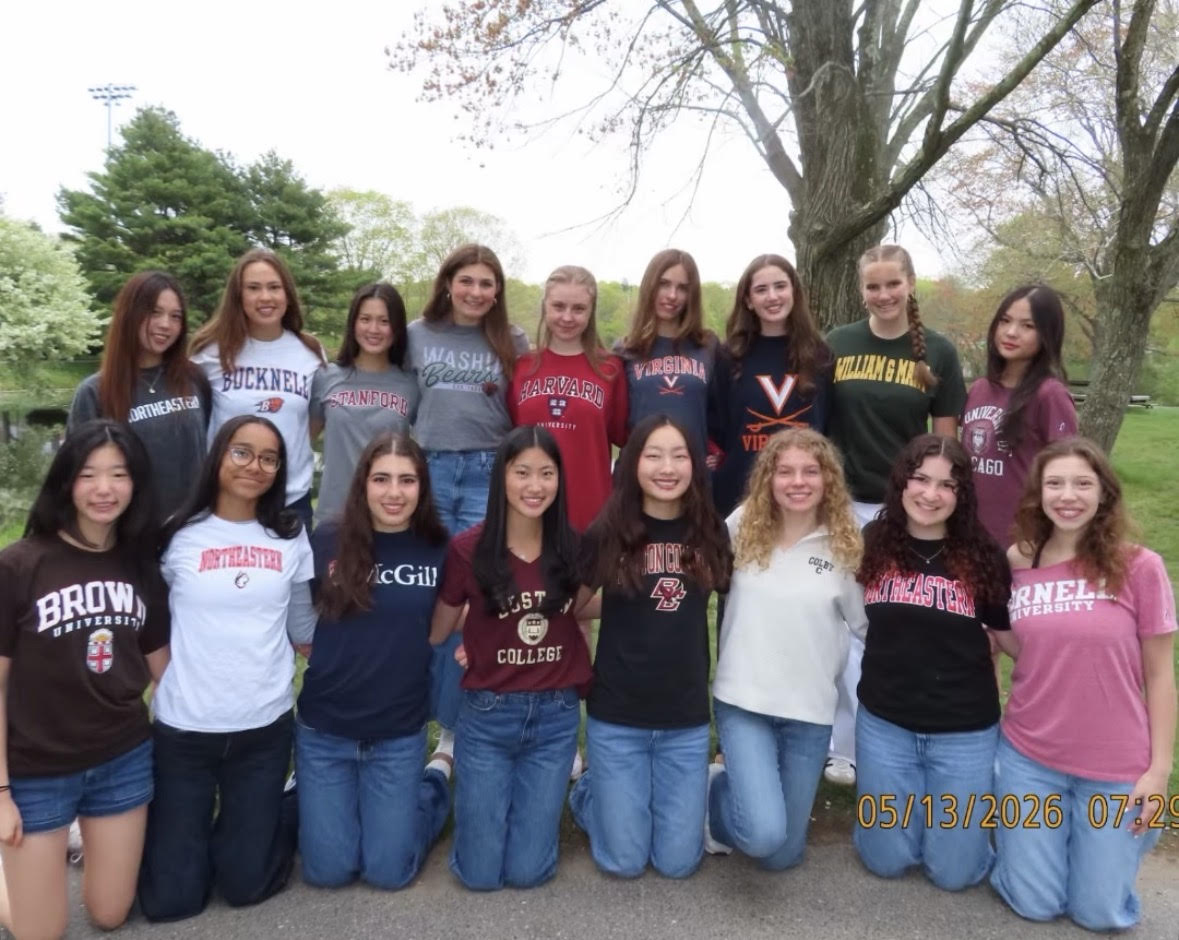
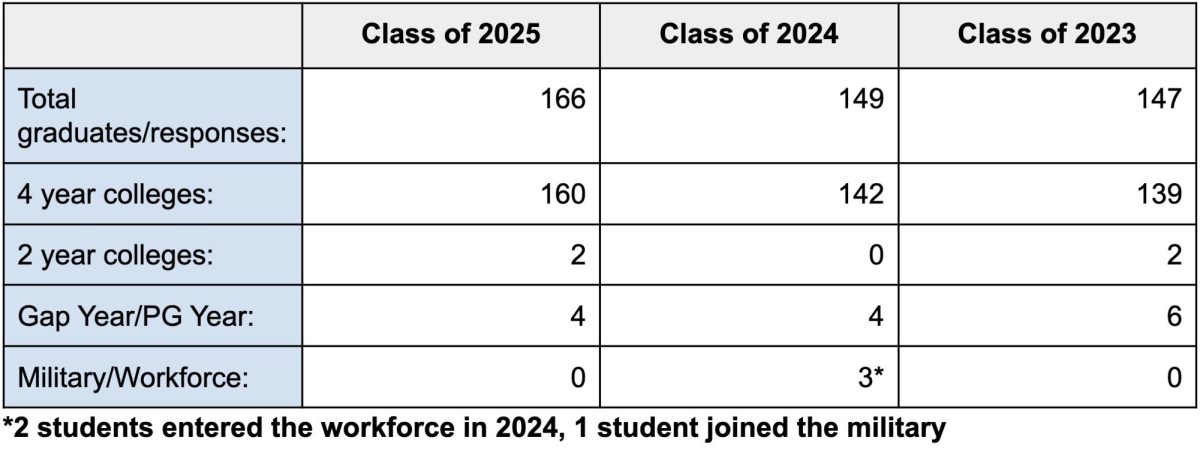
Data from the Class of 2025 show that 160 out of 166 students – 96% – planned to attend four-year colleges, while only two started two-year programs and four took a gap year. Similar patterns appear in previous years, with alternative paths not involving college consistently representing a small minority of post-graduation plans.
“I think a lot of students here want to continue pushing themselves academically, so going to a four-year college feels like the natural next step,” said senior Oren Waxman.
Taking time off through a gap year offers an opportunity to step outside this structure. Whether through work, travel, or service, the time can provide space to reassess goals before committing to a long-term plan.
“Some students want to take a year off and reapply and kind of reassess,” said guidance counselor Luke Townsend. “Many use the time for travel, work, or service that can be difficult [to do] once they graduate from college and are looking for a job.”
Students pursuing hands-on careers may choose to attend trade schools and or participate in apprenticeship programs, which can provide direct training and quicker entry into the workforce. The overall trends indicate these options are becoming more popular in the U.S.
“Trade school enrollment has significantly increased, growing from 4.2 million in 2010 to an estimated 8.4 million in 2025,” according to natradeschools.edu. “Projections of enrollment continue to rise by 6.6% annually between 2024 and 2030, significantly faster than the 0.8% projected growth for higher education.”
Despite rising national interest in these options, they are still relatively uncommon among WHS students.
While few at WHS may pursue alternatives to college, according to guidance counselors, success after high school still does not require everyone to follow a single path. Instead, they emphasize finding a direction that aligns with a student’s goals, whether that involves higher education, immediate employment, or alternative training programs.
“Student decisions are often shaped by a range of personal factors, including family responsibilities, financial concerns, and readiness to leave home,” said Townsend.
While most WHS students follow the traditional college route, a small number choose alternatives. Senior Michael Lin, for example, will attend the U.S. Air Force Academy after graduation.
“I feel like a lot of people think college is the only way to get a good job or a good life, but that’s just not true,” Lin said.
For Lin, the decision was both personal and practical.
“I’ve always wanted to serve my country,” Lin said. “America gave my family a lot of opportunity, and I feel like the best way to give back is to join the military.”
Even as national trends point toward growing interest in nontraditional routes, the culture at WHS continues to center around four-year college as the default. As a result, students who consider other options remain the exception rather than the norm.
“I think a lot of people assume that if you don’t follow a traditional four-year college path right away, you’re falling behind in some way,” said Waxman. “But there are a lot of different ways to build a successful future.”
This environment can create tension between pursuing personal passions and meeting perceived expectations from peers, family, or the school environment.
“My dad wanted me to go to an Ivy League school, but I thought to myself, ‘Do I really want to live the rest of my life wondering if I didn’t do what I wanted to do?’” said Lin.
As more students explore nontraditional routes nationally, the definition of success after graduation continues to expand, even at WHS. For many, that may still mean continuing along the expected path. For others, it may involve choosing a direction that differs from the majority, even within a community where that choice is less common.