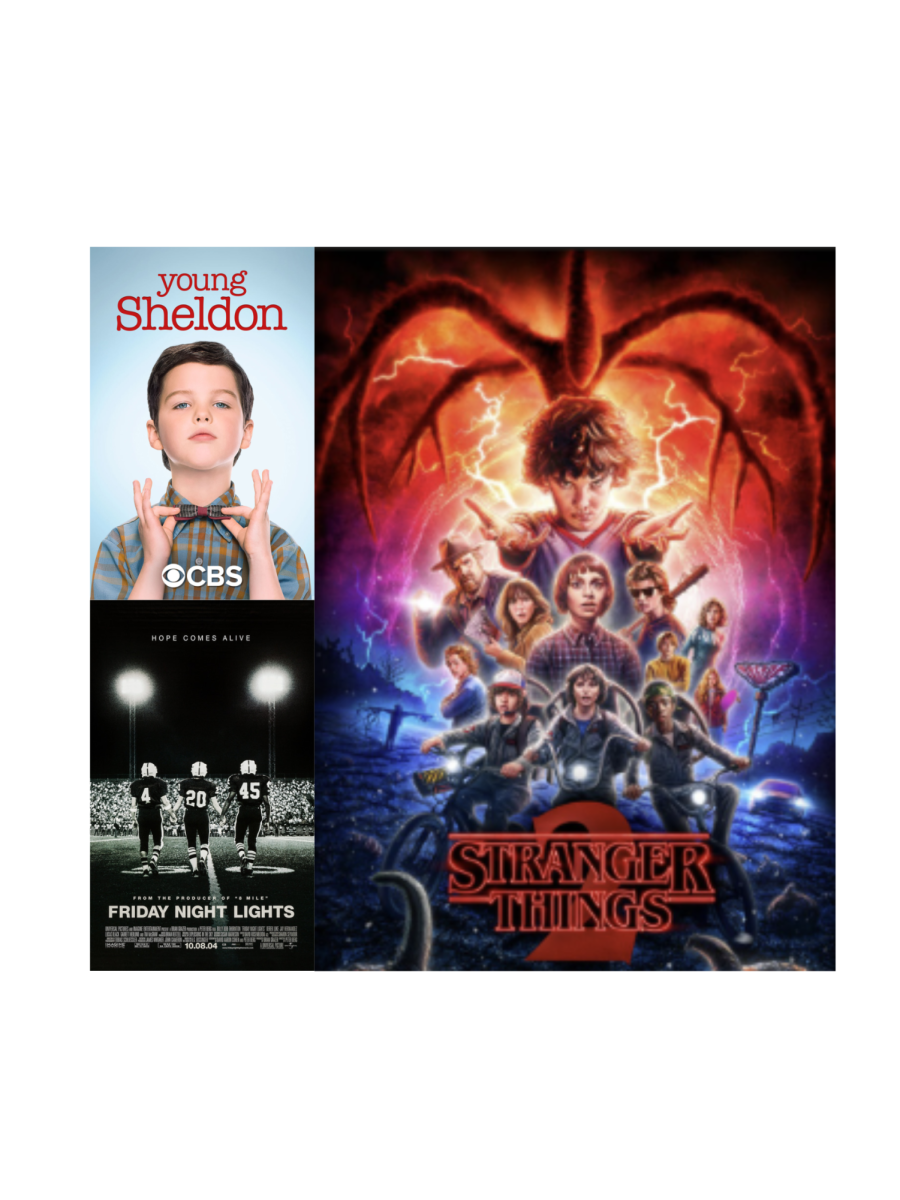
From “Friday Night Lights” to “Stranger Things,” high school-based TV shows have been one of the most popular genres for decades, even as students say they rarely reflect real high school life.
Much of that difference, according to teachers and students, comes down to how television compresses time and heightens drama, as well as removes the everyday structure of teenage lives. Other ways that shows can seem less relevant to real life include the location or time period where the show is set.
“Stranger Things takes place in the 1980s, so there’s no modern technology like we have now,” librarian Jennifer Barry said.
This gap created by differences from key elements of today’s teen lifestyle becomes more clear when comparing older teen portrayals to today’s digital heavy environment. In “Stranger Things,” characters spend large amounts of time together – hanging out in basements, playing games like Dungeons and Dragons, and using phones attached to the wall instead of texting or social media.
“There’s a lot more in-person interaction,” Barry said. “Even after school, they’re together physically instead of being on devices or texting.”
The way the plotlines heighten dramatic elements of people’s lives is another aspect that can be very different on television than in reality.
“They’re often exaggerated,” freshman Eiffel Lu said. “In shows like ‘Friday Night Lights,’ sports feel overly dramatic and more intense than general high school is.”
Making this comparison can help students appreciate their reality more, helping them recognize that school life is much more normal and predictable than the series of events on TV, even though the unconventional stories they tell are often what make them popular.
“‘Stranger Things’ is different because I’m not fighting monsters every day,” said junior Eric Cui. “And for ‘Young Sheldon,’ I’m definitely not as smart as him.”
Friendships and families are a more prominent similarity between students’ real lives and the way they are portrayed on TV shows.
“For ‘Stranger Things,’ [they] have a great group of friends [they] can rely on, which I can relate to,” said Cui. “And for ‘Young Sheldon,’ I also have a great family and people close to me.”
For many students, the differences became more noticeable after entering high school themselves. Television often presents teenage years as intense emotionally and constantly changing while real school life feels more routine and predictable.
“They made high school seem more intense and intimidating,” Lu said. “There was a sense it would be very different from middle school.”
This view shifted after spending more time in high school and seeing the reality at WHS.
“It’s less complicated, less dramatic, and focuses more on education,” Lu said.
Despite the exaggeration, students still can recognize certain elements that feel familiar. Some viewers note that ‘Stranger Things’ puts a lot of emphasis on group dynamics and relationships, which often reflect actual adolescent experiences, even if the circumstances are more dramatic.
“There’s still that layer of figuring out who you are, who your friends are, and how friendships change as you get older,” Barry said.
Many students also said their priorities changed after entering high school. Television often focuses heavily on popularity, relationships, and athletic feats, while real students become more focused on academic plans over time.
“I thought high school was going to be a lot different,” Cui said. “I thought I’d be committed to Division one football by now.”