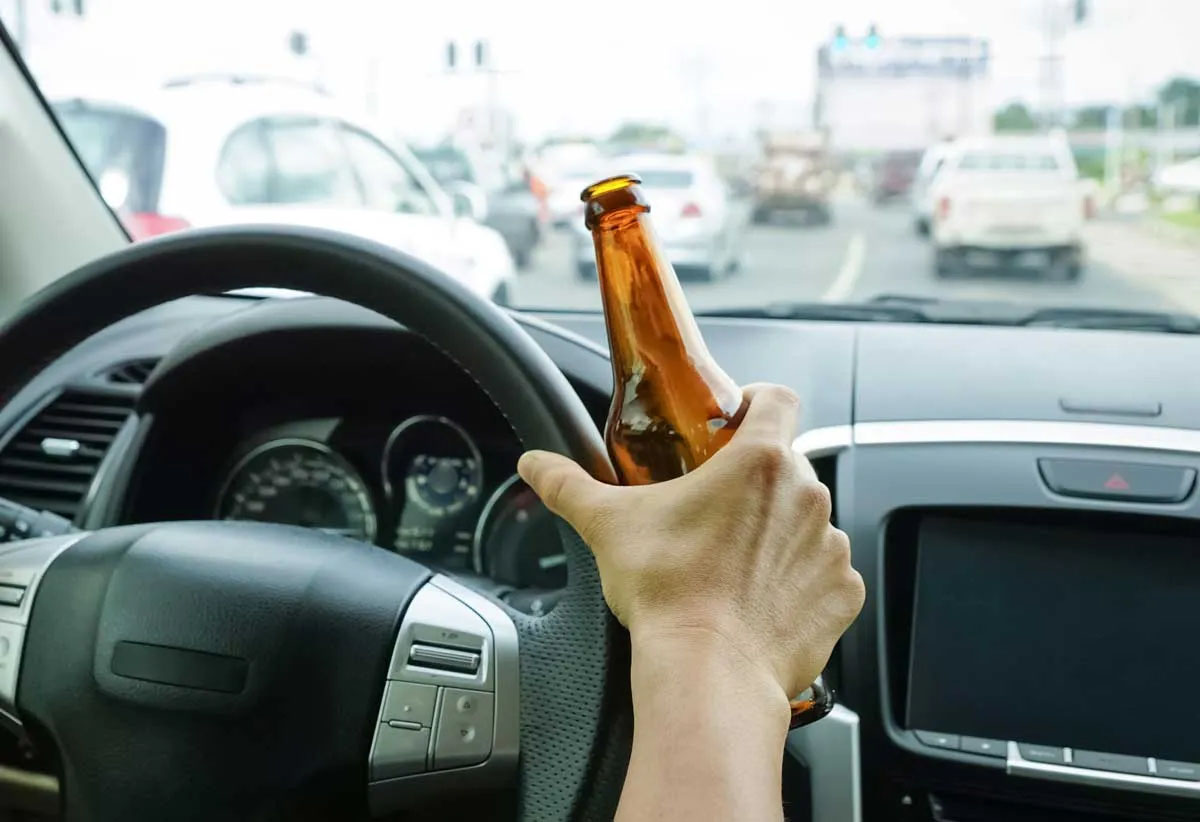
Every day approximately 35 people in the U.S. die in drunk driving accidents, and one in four car crashes caused by teen drivers involved alcohol as a contributing factor, according to the National Highway Traffic Safety Administration. At Weston High School, these kinds of statistics have led students and staff to believe drunk driving remains a serious concern, even as education efforts continue to expand.
Drunk driving, or operating under the influence (OUI), occurs when a driver’s ability to safely operate a car is impaired by alcohol. It increases the risk of crashes, injuries and fatalities. School officials and students agree that awareness has improved, but risks still exist.
“Most kids know that drunk driving is very bad for you,” said sophomore Jaime Hawkes. “Obviously, driving is very dangerous on its own, and being intoxicated while driving is a whole nother level of threatning.”
This awareness can be traced back to the school’s health curriculum introducing the topic early and building on it each year.
“In freshman year, we look at substance use through a prevention lens where we ask students to understand the facts around substance use, such as serving size and binge drinking,” health teacher Danielle Cooper said. “We end with a lesson, Drunk Busters, which is co-taught with our student resource officer.”
In Drunk Busters, students wear goggles that mimic the visual impairment of a 0.08 blood alcohol concentration as they conduct field sobriety testing.
“The majority of freshmen fail these tests, and as a result they understand how dangerous OUI can be,” Cooper said.
While awareness has increased, the statistics show that teens are still taking risks, not only with their own lives but with those of other drivers and passengers. According to the Centers for Disease Control, over 40% of people killed in car accidents caused by drunk driving are not the impaired driver but are instead the passengers or other drivers.
“[Drunk driving] is definitely super dangerous because you are responsible for other people’s lives in the car,” said junior Ashley DeFilippo.
While some students emphasize the dangers of drunk driving itself, others point to what they see as a larger issue behind it.
“I believe that the police need to start doing a better job at controlling teen drinking because it’s so common in this school,” said an anonymous Weston High School student. “Drinking can be very excessive in Weston, and the police could do a better job at keeping everyone in line.”
Some believe that teen drinking tendencies are in large part due to peer pressure. Cooper has noted, however, that peer influence can also be positive.
“I am heartened to hear from students that a lot of the time, this peer pressure is to make responsible decisions around driving under the influence,” Cooper said. “Choosing activities other than drinking, as well as choosing cautionary measures when students have been drinking, are more common.”
Some research indicates that teens are more likely in recent years to find alternatives to driving when impaired, particularly in areas where calling an Uber or Lyft is an option (MAAD.org).The best choice to make, of course, is still to avoid drinking and driving because the outcomes of making the wrong choice can often be life-changing.
“Of all the stories I have heard about driving under the influence, they have common themes,” said Cooper. “One, they wish they hadn’t made that decision, and two they regret the harm that was caused.”