The Lindsay Clancy trial has captured local attention given the severity of her alleged crime: killing her three children. The trial ended recently in a mistrial due to a hung jury, sparking debates regarding mental health, criminal responsibility and social media’s influence on public opinion. Many Weston High School students have followed the case through news coverage, family conversations, and platforms such as TikTok and Instagram.
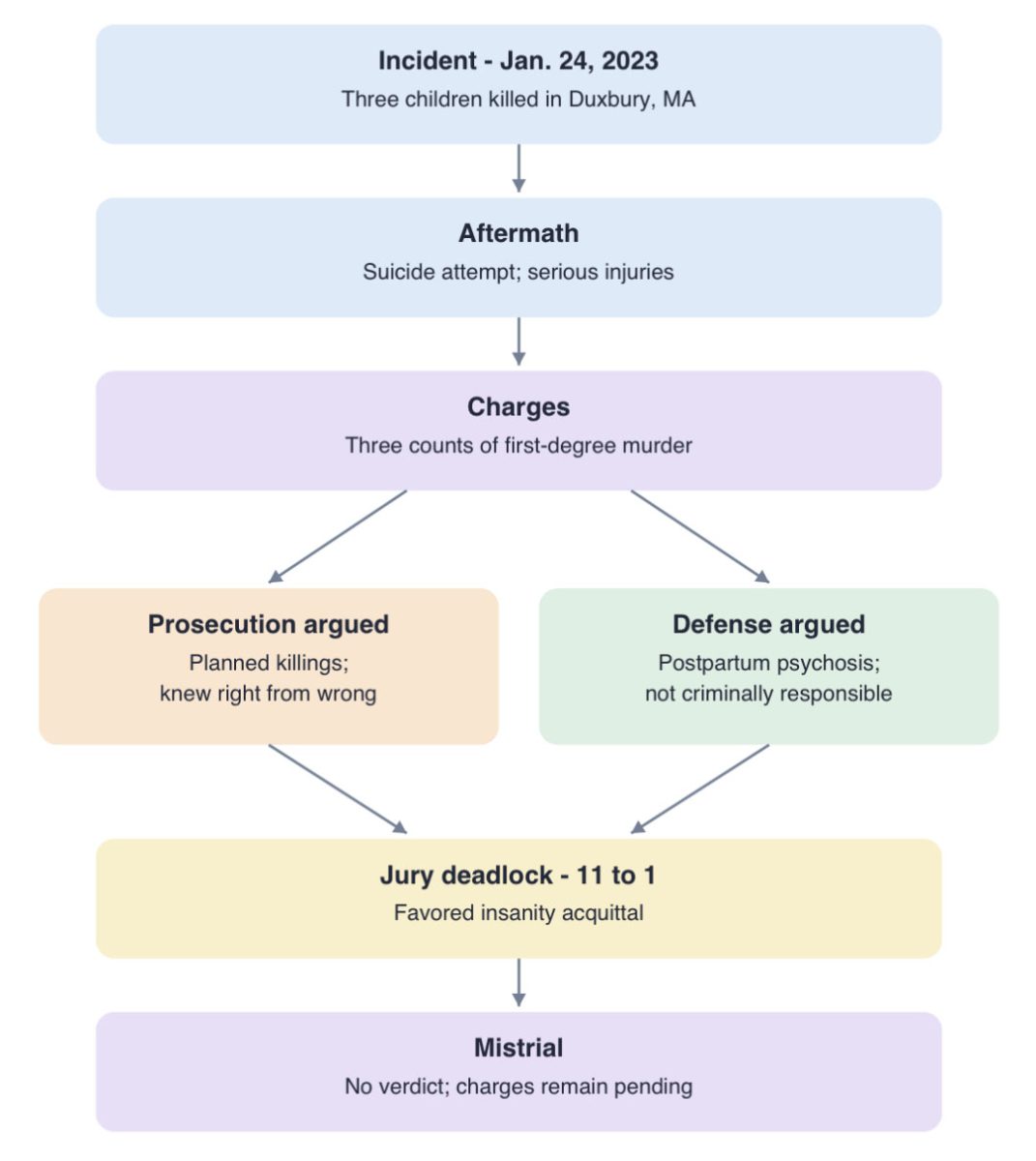
Clancy, a 36 year-old from Duxbury, MA, was charged with the January 2023 murder of her three children. During her trial, the defense did not dispute that Clancy caused the children’s deaths. Instead, her attorneys argued she was not guilty by reason of insanity brought on by postpartum psychosis.
The case’s reach surprised people familiar with the town where it happened.
“My initial reaction was shocked,” said history teacher Cary Monz. “I grew up on the South Shore and spent a lot of time in Duxbury as a kid. It was the last thing I expected so close to home.”
For some students, family members played a role in introducing them to the case and shaping their interest.
“My mom’s a criminal lawyer, so she has a very attention-to-detail mindset,” said senior Cecily Gardner. “She kind of got me hooked on it, so then I went down the rabbit hole.”
As students learned more about the case, they formed opinions about how Clancy’s mental health should factor into her criminal responsibility. The defense’s argument that during the deaths Clancy experienced postpartum psychosis, a rare but serious mental health condition, ignited attention to the condition.
“I think that the case shouldn’t be just viewed through punishment. Lindsay Clancy may have needed psychiatric treatment,” said sophomore Katerina Sakkas. “And I think her mental health should definitely be considered alongside the seriousness of what happened.”
Others at WHS feel strongly that Clancy was criminally responsible given the severity of her crime.
“I really do think she deserves to go to jail. She killed three kids; there’s really no other option than to send her to prison,” said junior Jacob Kasanov. “It’s just what’s right.”
Some who believe she was not responsible for her actions think that the case reflects a general lack of understanding about the severity of some forms of psychological impairment.
“People really do need to think about how real mental illness can be, and it truly can lead to tragic things like this,” said Sakkas. “People need to understand that it isn’t always the individual’s fault.”
These contrasting opinions among students also played out in the jury deliberations during Clancy’s trial. Massachusetts requires a unanimous jury verdict in first degree murder cases. After nearly six weeks of testimony and seven days of deliberations, the Clancy jury was unable to reach a final verdict, leaving Judge William Sullivan no choice but to declare a mistrial. Eleven jurors reportedly accepted the defense’s argument and were ready to find her not guilty by reason of insanity, while one juror disagreed.
The mistrial created new controversies to engage those following the trial.
“The jury should not have been hung because the judge should have removed the juror who couldn’t follow the rule beyond reasonable doubt,” Gardner said.
The disagreement over the jury did not end when the mistrial was declared. Clancy’s attorneys have since asked the judge to investigate the lone juror who favored conviction, including allegations that he may have used a cellphone during deliberations, which is not allowed.
The mistrial has also raised questions about what could happen if the case goes back to court.
“I think if they retry the case, people are going to pay even more attention now that everyone knows how divided the first jury was,” said Gardner.
For students who heard about the case before the mistrial, social media played a large role in how they first encountered it.
“I think either my sister or mom just mentioned it, and then I looked it up,” said senior Izzy Wheler. “Then I also saw it on Instagram. It was honestly everywhere.”
With so much of the discussion happening online, questions about where information came from have become part of the conversation.
“It is important to use our digital literacy skills when seeing videos on social media and being careful about checking sources for ‘breakthrough’ takes,” said Monz.
Online reactions often left little room for uncertainty.
“When I first saw stuff about it online, everyone already had a side,” Wheler said. “People were saying she was completely guilty or completely not responsible, and there wasn’t really much in between.”
The speed of those posts can also make a complicated trial seem easier to judge than it is.
“TikTok makes cases like this feel really simple when they’re actually complicated,” said Kasanov. “You see one video and suddenly everyone thinks they know exactly what happened.”
Even a new verdict will not undo the tragedy at the center of the case. The legal questions may eventually have an answer, but the deaths of the children and the pain felt by their family will remain.
“I don’t think there’s an outcome where anyone feels good about what happens next,” said Sakkas.“It’s just a really tragic case.”